Full Body X-Ray: Benefits and What to Expect
2/16/2026
A full-body X-ray is a diagnostic imaging procedure that captures images of multiple areas of the body using low-dose ionizing radiation. Unlike a single targeted X-ray (such as a chest or hand X-ray), this approach evaluates several major regions in one session. It is most commonly used in trauma assessment, emergency medicine, and specific clinical situations where doctors need a broad overview of skeletal structures.
If you’ve been advised to undergo one, here’s everything you need to know — including benefits, safety considerations, and what to expect.
What Is a Full Body X-Ray?
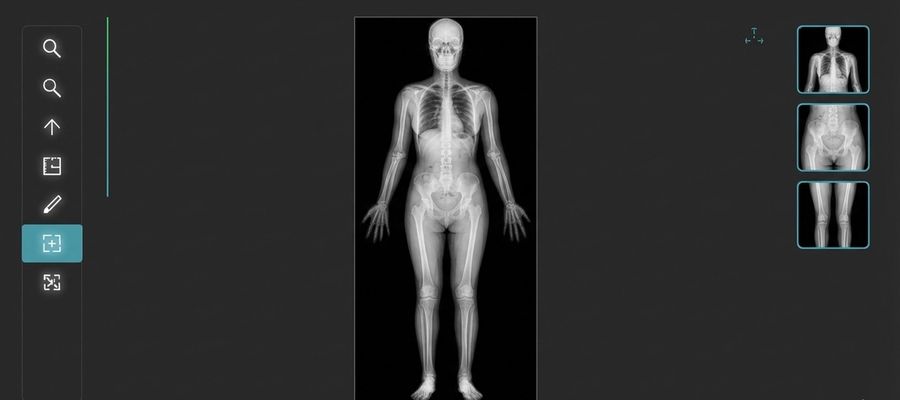
X-rays use controlled radiation to create images of bones and certain internal structures. In a full body session, images are taken of multiple regions, often including:
- Skull
- Spine
- Chest
- Abdomen
- Pelvis
- Arms and legs
The goal is to quickly assess for fractures, dislocations, structural abnormalities, or trauma-related injuries.
Why Would a Doctor Recommend It?
A full body X-ray is not used as a routine screening tool for healthy individuals. It is typically recommended in situations such as:
- Major trauma (car accidents, severe falls)
- Suspected multiple fractures
- Workplace injury evaluations
- Pre-surgical assessments
- Monitoring bone disorders
- Detecting skeletal abnormalities
In emergency departments, it can help physicians rapidly identify life-threatening injuries.
Benefits of a Full Body X-Ray
1. Rapid Diagnosis
Images are taken quickly, which is critical in trauma care.
2. Cost-Effective
Compared to CT or MRI scans, X-rays are generally more affordable.
3. Widely Available
Most hospitals and imaging centers offer X-ray services.
4. Excellent for Bone Evaluation
X-rays are highly effective for detecting:
- Fractures
- Dislocations
- Arthritis
- Bone infections
- Structural deformities
5. Lower Radiation Compared to CT
Although X-rays use radiation, exposure levels are significantly lower than full body CT scans.
What to Expect During the Procedure
Before the Exam
- Remove jewelry and metal objects.
- Change into a medical gown if necessary.
- Inform staff if you are pregnant or might be.
During the Exam
- You will stand, sit, or lie down depending on the body part being imaged.
- A technician will position you carefully.
- You may be asked to hold your breath briefly.
- The machine emits a short burst of radiation to capture each image.
The entire process usually takes 15–30 minutes, depending on how many images are required.
After the Exam
- No recovery time is needed.
- You can return to normal activities immediately.
- A radiologist analyzes the images and sends a report to your doctor.
Is It Safe?
X-rays use ionizing radiation, but the dose is carefully controlled. For most adults, occasional diagnostic X-rays pose very low risk. However:
- Pregnant individuals should avoid unnecessary radiation.
- Children require adjusted, lower doses.
- Repeated imaging should be medically justified.
Always discuss concerns with your healthcare provider before the exam.
Limitations
While useful, full body X-rays:
- Do not provide detailed soft tissue imaging
- May miss small tumors
- Are not ideal for preventive screening
- Offer less detail than MRI or CT scans
Your doctor will determine whether this test is appropriate based on your symptoms.
Final Thoughts
A full body X-ray is a fast, effective imaging method primarily used in trauma and skeletal evaluation. It offers rapid results, wide availability, and relatively low radiation exposure. While not intended for routine screening, it remains an essential diagnostic tool in modern medicine.
If your doctor recommends one, you can expect a straightforward, painless procedure with immediate return to normal activities.
Frequently Asked Questions
The procedure typically takes between 15 and 30 minutes, depending on how many images are required.
No, the procedure is completely painless. You may only feel mild discomfort from holding certain positions briefly.
Radiation levels are low and medically regulated. Exposure from a full body X-ray is significantly lower than that of a CT scan.
In most cases, yes. Unlike some imaging tests, X-rays usually do not require fasting unless specified by your doctor.
It is generally avoided during pregnancy unless absolutely necessary. Always inform medical staff if you are pregnant or suspect you might be.
Preliminary findings may be available quickly in emergency settings. Otherwise, results are typically reviewed by a radiologist within 24–48 hours.
No. It is typically performed for specific medical reasons such as trauma or suspected skeletal injury.